2025


Discover a wide array of genres in The Phi Beta Kappa Society’s 2025 Summer Reading List, from page-turning thrillers to timeless classics, thought-provoking science and moving memoirs. 

Handpicked by our dedicated members, this year’s selection features a blend of fiction and nonfiction, highlighting diverse and intersectional stories that offer something for everyone.

We appreciate the thoughtful suggestions from our members and look forward to a summer filled with enriching and enjoyable reading experiences!


Member Suggestions

everything-is-tuberculosis
Everything is Tuberculosis by John Green

Tuberculosis has been entwined with hu­manity for millennia. Once romanticized as a malady of poets, today tuberculosis is seen as a disease of poverty that walks the trails of injustice and inequity we blazed for it.

In 2019, author John Green met Henry Reider, a young tuberculosis patient at Lakka Government Hospital in Sierra Leone. John be­came fast friends with Henry, a boy with spindly legs and a big, goofy smile. In the years since that first visit to Lakka, Green has become a vocal advocate for increased access to treatment and wider awareness of the healthcare inequi­ties that allow this curable, preventable infec­tious disease to also be the deadliest, killing over a million people every year.

In Everything Is Tuberculosis, John tells Henry’s story, woven through with the scientific and social histories of how tuberculosis has shaped our world—and how our choices will shape the future of tuberculosis.
too-big-for-a-single-mind
Too Big for a Single Mind by Tobias Hürter, David Shaw (Translator)

There may never be another era of science like the first half of the twentieth century, when a peerless cast of physicists—Albert Einstein, Marie Curie, Max Planck, Wolfgang Pauli, and others—came together to uncover the quantum world, a concept so outrageous and contrary to traditional physics that its own founders rebelled against it until the equations held up and fundamentally changed our understanding of reality.

In page-turning chapters, Tobias Hürter takes us back to this momentous time in science history, when the creation of quantum theory demanded the combined efforts of friends and rivals, lovers and loners, straight-edged intellectuals and freethinking dreamers—and when, with the Nazis in pursuit of an atomic bomb, the stakes couldn’t be higher. In this stirring, grand narrative, brought to life by letters, notes, research papers, diaries, and memoirs, we witness the birth of an idea that revolutionized both physics and our world at large and unleashed the profound and terrifying power of the atom—and that ultimately stands as a testament to the boundless potential of genius in collaboration.

the-bluestockings
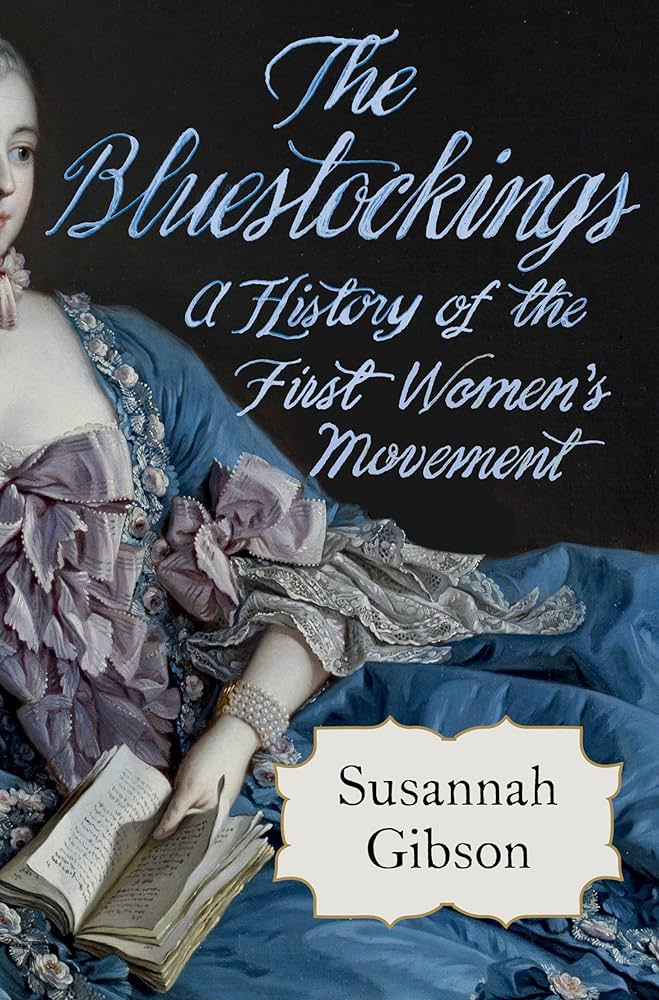
The Bluestockings by Susannah Gibson

In England in the 1700s, a woman who was an intellectual, spoke out, or wrote professionally was considered unnatural. After all, as the wisdom of the era dictated, a clever woman—if there were such a thing—would never make a good wife. But a circle of women called the Bluestockings did something extraordinary: coming together in glittering salons to discuss and debate as intellectual equals with men, they fought for women to be educated and to have a public role in society.

In this intimate and revelatory history, Susannah Gibson delves into the lives of these pioneering women. Elizabeth Montagu established one of the most famous salons of the Bluestocking movement, with everyone from royalty to revolutionaries clamoring for an invitation to attend. Her younger sister, Sarah Scott, imagined a female-run society and created a women’s commune. Meanwhile, Hester Thrale, who also had a salon, saved her husband’s brewery from bankruptcy and, after being widowed, married a man she loved—Italian, Catholic, and not of her social class. Other women made a name for themselves through their publications, including Catharine Macaulay, author of an eight-volume history of England, and Frances Burney, author of the audacious novel Evelina.

In elegant prose, Gibson reveals the close and complicated relationships between these women, how they supported and admired each other, and how they sometimes judged and exploited one another. Some rebelled quietly, while others defied propriety with adventurous and scandalous lives. With moving stories and keen insight, The Bluestockings uncovers how a group of remarkable women slowly built up an eviscerating critique of their male-dominated world that society was not yet ready to hear.

memorial-days

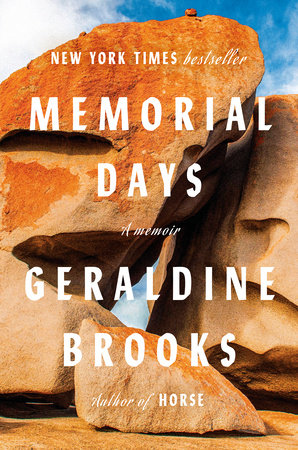
Memorial Days by Geraldine Brooks

Many cultural and religious traditions expect those who are grieving to step away from the world. In contemporary life, we are more often met with red tape and to-do lists. This is exactly what happened to Geraldine Brooks when her partner of more than three decades, Tony Horwitz – just sixty years old and, to her knowledge, vigorous and healthy – collapsed and died on a Washington, D. C. sidewalk.

After spending their early years together in conflict zones as foreign correspondents, Geraldine and Tony settled down to raise two boys on Martha’s Vineyard. The life they built was one of meaningful work, good humor, and tenderness, as they spent their days writing and their evenings cooking family dinners or watching the sun set with friends at the beach. But all of this ended abruptly when, on Memorial Day 2019, Geraldine received the phone call we all dread. The demands were immediate and many. Without space to grieve, the sudden loss became a yawning gulf.

Three years later, she booked a flight to a remote island off the coast of Australia with the intention of finally giving herself the time to mourn. In a shack on a pristine, rugged coast she often went days without seeing another person. There, she pondered the various ways in which cultures grieve and what rituals of her own might help to rebuild a life around the void of Tony’s death.

A spare and profoundly moving memoir that joins the classics of the genre, Memorial Days is a portrait of a larger-than-life man and a timeless love between souls that exquisitely captures the joy, agony, and mystery of life.

aflame

Aflame by Pico Iyer

Pico Iyer has made more than one hundred retreats over the past three decades to a small Benedictine hermitage high above the sea in Big Sur, California. He’s not a Christian—or a member of any religious group—but his life has been transformed by these periods of time spent in silence. That silence reminds him of what is essential and awakens a joy that nothing can efface. It’s not just freedom from distraction and noise and rush: it’s a reminder of some deeper truths he misplaced along the way.

In Aflame, Iyer connects with inner stillness and joy in his many seasons at the monastery, even as his life is going through constant change: a house burns down, a parent dies, a daughter is diagnosed with cancer. He shares the revelations he experiences, alongside wisdom from other nonmonastics who have learned from adversity and inwardness. And most profoundly, he shows how solitude can be a training in community and companionship. In so doing, he offers a unique outsider’s view of monastic life—and of a group of selfless souls who have dedicated their days to ensuring there’s a space for quiet and recollection that’s open to us all.

Radiant, intimate, and gripping, Aflame offers ageless counsel about the power of silence and what it can teach us about how to live, how to love, and, ultimately, how to die.

custodians-of-wonder

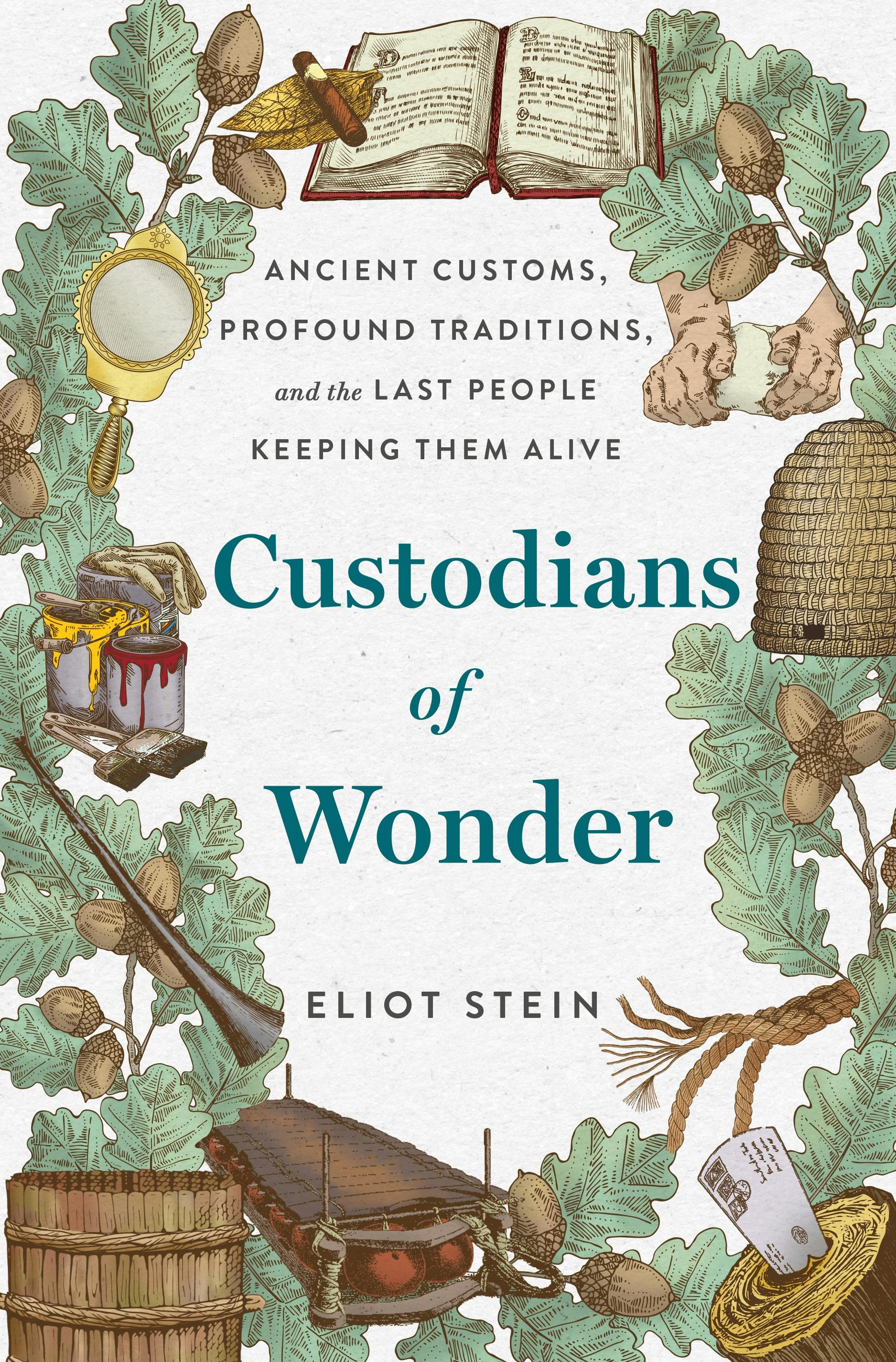
Custodians of Wonder by Eliot Stein

Eliot Stein has traveled the globe in search of remarkable people who are preserving some of our most extraordinary cultural rites. In Custodians of Wonder: Ancient Customs, Profound Traditions, and the Last People Keeping Them Alive, Stein introduces readers to a man saving the secret ingredient in Japan's 700-year-old original soy sauce recipe. In Italy, he learns how to make the world's rarest pasta from one of the only women alive who knows how to make it. And in India, he discovers a family rumored to make a mysterious metal mirror believed to reveal your truest self. From shadowing Scandinavia's last night watchman to meeting a 27th-generation West African griot to tracking down Cuba's last official cigar factory “readers” more than a century after they spearheaded the fight for Cuban independence, Stein uncovers an almost lost world.

Climbing through Peru’s southern highlands, he encounters the last Inca bridge master who rebuilds a grass-woven bridge every year from the fabled Inca Road System. He befriends a British beekeeper who maintains a touching custom of "telling the bees" important news of the day. And he crunches through a German forest to find the official mailman of the only tree in the world with its own address – to which countless people from across the world have written in hopes of finding love. These are just some of the last custodians preserving age-old rites on the brink of disappearance against all odds. Let Eliot Stein introduce you to all of them.

shakespeare-in-a-divided-america

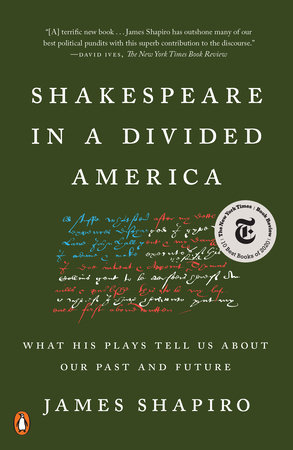
Shakespeare in a Divided America by James Shapiro

The plays of William Shakespeare are rare common ground in the United States. For well over two centuries, Americans of all stripes—presidents and activists, soldiers and writers, conservatives and liberals alike—have turned to Shakespeare’s works to explore the nation’s fault lines. In a narrative arching from Revolutionary times to the present day, leading scholar James Shapiro traces the unparalleled role of Shakespeare’s four-hundred-year-old tragedies and comedies in illuminating the many concerns on which American identity has turned. 

From Abraham Lincoln’s and his assassin, John Wilkes Booth’s, competing Shakespeare obsessions to the 2017 controversy over the staging of Julius Caesar in Central Park, in which a Trump-like leader is assassinated, Shakespeare in a Divided America reveals how no writer has been more embraced, more weaponized, or has shed more light on the hot-button issues in our history.

oscar-wars

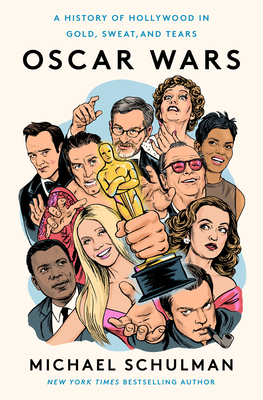
Oscar Wars by Michael Schulman

America does not have royalty. It has the Academy Awards. For nine decades, perfectly coiffed starlets, debonair leading men, and producers with gold in their eyes have chased the elusive Oscar. What began as an industry banquet in 1929 has now exploded into a hallowed ceremony, complete with red carpets, envelopes, and little gold men. But don’t be fooled by the pomp: the Oscars, more than anything, are a battlefield, where the history of Hollywood—and of America itself—unfolds in dramas large and small. The road to the Oscars may be golden, but it’s paved in blood, sweat, and broken hearts.

In Oscar Wars, Michael Schulman chronicles the remarkable, sprawling history of the Academy Awards and the personal dramas—some iconic, others never-before-revealed—that have played out on the stage and off camera. Unlike other books on the subject, each chapter takes a deep dive into a particular year, conflict, or even category that tells a larger story of cultural change, from Louis B. Mayer to Moonlight. Schulman examines how the red carpet runs through contested turf, and the victors aren't always as clear as the names drawn from envelopes. Caught in the crossfire are people: their thwarted ambitions, their artistic epiphanies, their messy collaborations, their dreams fulfilled or dashed.

Featuring a star-studded cast of some of the most powerful Hollywood players of today and yesterday, as well as outsiders who stormed the palace gates, this captivating history is a collection of revelatory tales, each representing a turning point for the Academy, for the movies, or for the culture at large.

the-women

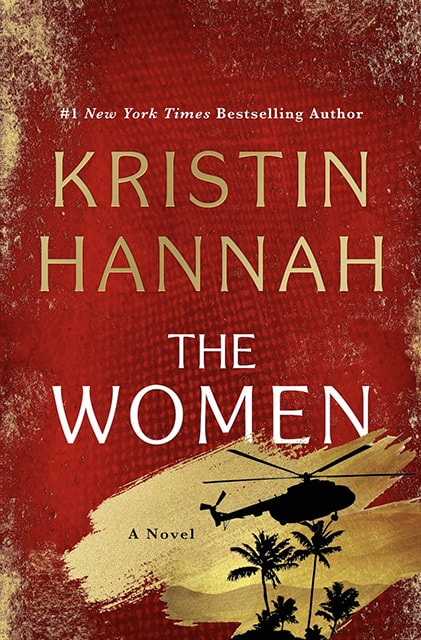
The Women by Kristin Hannah

“Women can be heroes, too.”

When twenty-year-old nursing student Frances “Frankie” McGrath hears these unexpected words, it is a revelation. Raised on idyllic Coronado Island and sheltered by her conservative parents, she has always prided herself on doing the right thing, being a good girl. But in 1965 the world is changing, and she suddenly imagines a different choice for her life. When her brother ships out to serve in Vietnam, she impulsively joins the Army Nurse Corps and follows his path.

As green and inexperienced as the men sent to Vietnam to fight, Frankie is overwhelmed by the chaos and destruction of war, as well as the unexpected trauma of coming home to a changed and politically divided America.

The Women is the story of one woman gone to war, but it shines a light on the story of all women who put themselves in harm’s way to help others. Women whose sacrifice and commitment to their country has all too often been forgotten. A novel of searing insight and lyric beauty, The Women is a profoundly emotional, richly drawn story with a memorable heroine whose extraordinary idealism and courage under fire define a generation.

you-dreamed-of-empires

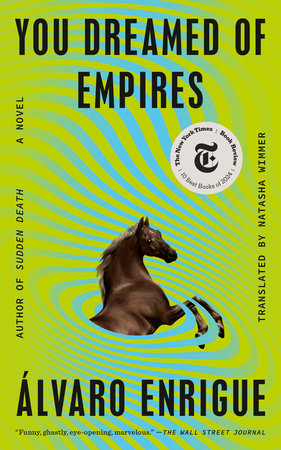
You Dreamed of Empires by Álvaro Enrigue, Natasha Wimmer (Translator)

One morning in 1519, conquistador Hernán Cortés enters the city of Tenochtitlan – today’s Mexico City. Later that day, he will meet the emperor Moctezuma in a collision of two worlds, two empires, two languages, two possible futures.

Cortés is accompanied by his captains, his troops, his prized horses, and his two translators: Friar Aguilar, a taciturn friar, and Malinalli, an enslaved, strategic Nahua princess. After nearly bungling their entrance to the city, the Spaniards are greeted at a ceremonial welcome meal by the steely Aztec princess Atotoxtli, sister and wife of Moctezuma. As they await their meeting with the emperor – who is at a political and spiritual crossroads, and relies on hallucinogens to get by – Cortés and his entourage are ensconced in the labyrinthine palace. Soon, one of Cortés’s captains, Jazmín Caldera, overwhelmed by the grandeur of the place, begins to question the ease with which they were welcomed into the city, and wonders at the chances of getting out alive, much less conquering the empire. And what if… they don’t?

You Dreamed of Empires brings Tenochtitlan to life at its height, and reimagines its destiny. The incomparably original Álvaro Enrigue sets afire the moment of conquest and turns it into a moment of revolution, a restitutive, fantastical counterattack, in a novel so electric and so unique that it feels like a dream.

broken-country

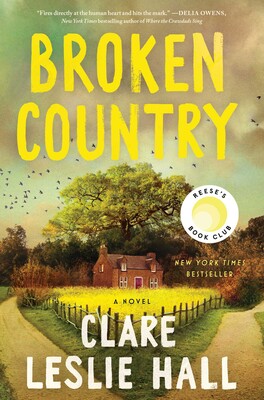
Broken Country by Clare Leslie Hall

“The farmer is dead. He is dead, and all anyone wants to know is who killed him.”

Beth and her gentle, kind husband Frank are happily married, but their relationship relies on the past staying buried. But when Beth’s brother-in-law shoots a dog going after their sheep, Beth doesn’t realize that the gunshot will alter the course of their lives. For the dog belonged to none other than Gabriel Wolfe, the man Beth loved as a teenager—the man who broke her heart years ago. Gabriel has returned to the village with his young son Leo, a boy who reminds Beth very much of her own son, who died in a tragic accident.

As Beth is pulled back into Gabriel’s life, tensions around the village rise and dangerous secrets and jealousies from the past resurface, this time with deadly consequences. Beth is forced to make a choice between the woman she once was, and the woman she has become.

A sweeping love story with the pace and twists of a thriller, Broken Country is a novel of simmering passion, impossible choices, and explosive consequences that toggles between the past and present to explore the far-reaching legacy of first love.

the-god-of-the-woods
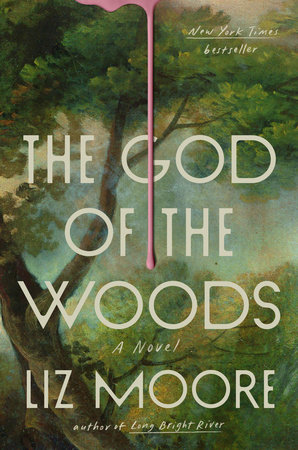
The God of the Woods by Liz Moore

When a teenager vanishes from her Adirondack summer camp, two worlds collide

Early morning, August 1975: a camp counselor discovers an empty bunk. Its occupant, Barbara Van Laar, has gone missing. Barbara isn’t just any thirteen-year-old: she’s the daughter of the family that owns the summer camp and employs most of the region’s residents. And this isn’t the first time a Van Laar child has disappeared. Barbara’s older brother similarly vanished fourteen years ago, never to be found.

As a panicked search begins, a thrilling drama unfolds. Chasing down the layered secrets of the Van Laar family and the blue-collar community working in its shadow, Moore’s multi-threaded story invites readers into a rich and gripping dynasty of secrets and second chances. It is Liz Moore’s most ambitious and wide-reaching novel yet.
young-mungo

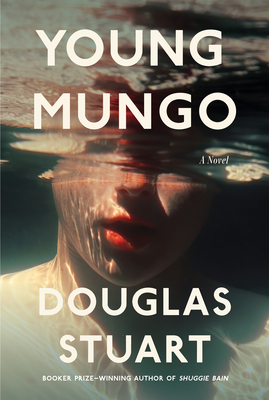
Young Mungo by Douglas Stuart

Growing up in a housing estate in Glasgow, Mungo and James are born under different stars—Mungo a Protestant and James a Catholic—and they should be sworn enemies if they’re to be seen as men at all. Yet against all odds, they become best friends as they find a sanctuary in the pigeon dovecote that James has built for his prize racing birds. As they fall in love, they dream of finding somewhere they belong, while Mungo works hard to hide his true self from all those around him, especially from his big brother Hamish, a local gang leader with a brutal reputation to uphold. And when several months later Mungo’s mother sends him on a fishing trip to a loch in Western Scotland with two strange men whose drunken banter belies murky pasts, he will need to summon all his inner strength and courage to try to get back to a place of safety, a place where he and James might still have a future.

Imbuing the everyday world of its characters with rich lyricism and giving full voice to people rarely acknowledged in the literary world, Young Mungo is a gripping and revealing story about the bounds of masculinity, the divisions of sectarianism, the violence faced by many queer people, and the dangers of loving someone too much.

island

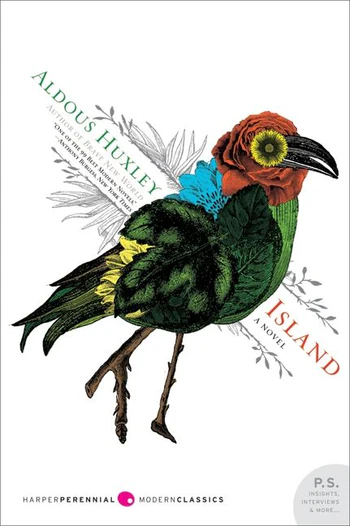
Island by Aldous Huxley

In the novel Huxley considered his most important, he transports us to the remote Pacific island of Pala, where an ideal society has flourished for 120 years. Inevitably, this island of bliss attracts the envy and enmity of the surrounding world. A conspiracy is underway to take over Pala, and events are set in motion when an agent of the conspirators, a newspaperman named Faranby, is shipwrecked there. What Faranby doesn't expect is how his time with the people of Pala will revolutionize all his values and—to his amazement—give him hope.

paper-boat

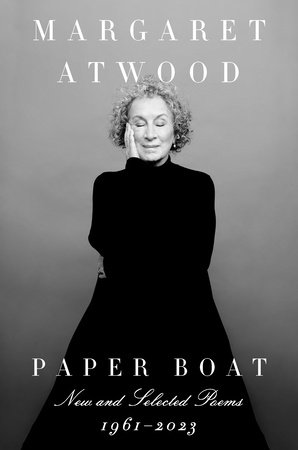
Paper Boat by Margaret Atwood

Tracing the legacy of Margaret Atwood—a writer who has fundamentally shaped the contemporary literary landscapes—Paper Boat: New and Selected Poems, 1961–2023 assembles Atwood’s most vital poems in one essential volume.

In pieces that are at once brilliant, beautiful, and hyper-imagined, Atwood gives voice to remarkably drawn characters—mythological figures, animals, and everyday people—all of whom have something to say about what it means to live in a world as strange as our own. “How can one live with such a heart?” Atwood asks, casting her singular spell upon the reader and ferrying us through life, death, and whatever comes next. Atwood, in her journey through poetry, illuminates our most innate joys and sorrows, desires and fears.

Spanning six decades of work—from her earliest beginnings to brand-new poems—this volume charts the evolution of one of our most iconic and necessary authors.

Phi Beta Kappa Authors

      
human-nature

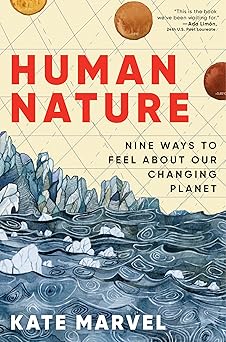
Human Nature by Kate Marvel (ΦBK, University of California Berkeley)

Scientist Kate Marvel has seen the world end before, sometimes several times a day. In the computer models she uses to study climate change, it’s easy to simulate rising temperatures, catastrophic outcomes, and bleak futures. But climate change isn’t just happening in those models. It’s happening here, to the only good planet in the universe. It’s happening to us. And she has feelings about that.  

Human Nature is a deeply felt inquiry into our rapidly changing Earth. In each chapter, Marvel uses a different emotion to explore the science and stories behind climate change. As expected, there is anger, fear, and grief—but also wonder, hope, and love. With her singular voice, Marvel takes us on a soaring journey, one filled with mythology, physics, witchcraft, bad movies, volcanoes, Roman emperors, sequoia groves, and the many small miracles of nature we usually take for granted.

Hopeful, heartbreaking, and surprisingly funny, Human Nature is a vital, wondrous exploration of how it feels to live in a changing world.

Human Nature is a biography of the Earth in nine emotions:

  • Wonder
  • Anger
  • Guilt
  • Fear
  • Grief
  • Surprise
  • Pride
  • Hope
  • Love
the-deadly-rise-of-anti-science

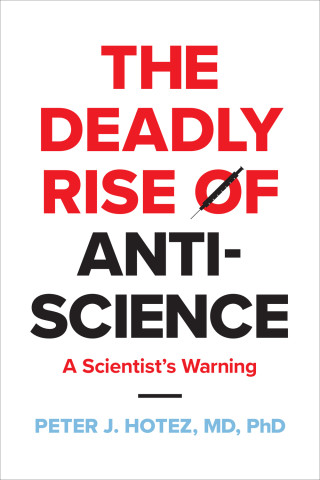
The Deadly Rise of Anti-science: A Scientist's Warning by Peter J. Hotez (ΦBK, Yale College)

During the height of the COVID-19 pandemic, one renowned scientist, in his famous bowtie, appeared daily on major news networks such as MSNBC, NPR, the BBC, and others. Dr. Peter J. Hotez often went without sleep, working around the clock to develop a nonprofit COVID-19 vaccine and to keep the public informed. During that time, he was one of the most trusted voices on the pandemic and was even nominated for a Nobel Peace Prize for his selfless work. He also became one of the main targets of anti-science rhetoric that gained traction through conservative news media.

In this eyewitness story of how the anti-vaccine movement grew into a dangerous and prominent anti-science element in American politics, Hotez describes the devastating impacts it has had on Americans' health and lives. As a scientist who has endured antagonism from anti-vaxxers and been at the forefront of both essential scientific discovery and advocacy, Hotez is uniquely qualified to tell this story. By weaving his personal experiences together with information on how the anti-vaccine movement became a tool of far-right political figures around the world, Hotez opens readers' eyes to the dangers of anti-science. He explains how anti-science became a major societal and lethal force: in the first years of the pandemic, more than 200,000 unvaccinated Americans needlessly died despite the widespread availability of COVID-19 vaccines. Even as he paints a picture of the world under a shadow of aggressive ignorance, Hotez demonstrates his innate optimism, offering solutions for how to combat science denial and save lives in the process.

to-free-the-captives

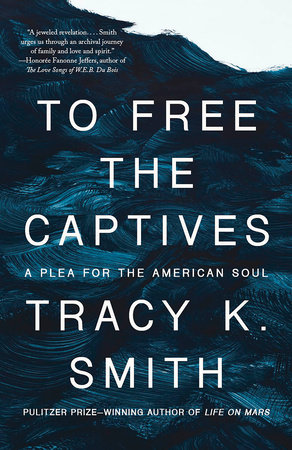
To Free the Captives by Tracy K. Smith (ΦBK, Princeton University)

In 2020, heartsick from constant assaults on Black life, Tracy K. Smith found herself soul-searching and digging into the historical archive for help navigating the “din of human division and strife.” With lyricism and urgency, Smith draws on several avenues of thinking—personal, documentary, and spiritual—to understand who we are as a nation and what we might hope to mean to one another.

To Free the Captives touches down in Sunflower, Alabama, the red-dirt town where Smith’s father’s family comes from, and where her grandfather returned after World War I with a hero’s record but difficult prospects as a Black man. Smith considers his life and the life of her father through the lens of history. Hoping to connect with their strength and continuance, she assembles a new terminology of American life. 

Bearing courageous witness to the terms of Freedom afforded her as a Black woman, a mother, and an educator in the twenty-first century, Smith etches a portrait of where we find ourselves four hundred years into the American experiment. Weaving in an account of her growing spiritual practice, she argues that the soul is not merely a private site of respite or transcendence, but a tool for fulfilling our duties to each other, and a sounding board for our most pressing collective questions: Where are we going as a nation? Where have we been?

dear-miss-perkins

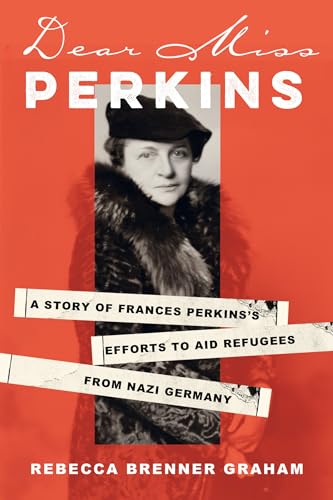
Dear Miss Perkins by Rebecca Brenner Graham (ΦBK, Mount Holyoke College)

She was the first woman to serve in a presidential cabinet, the longest-serving Labor Secretary, and an architect of the New Deal. Yet beyond these celebrated accomplishments there is another dimension to Frances Perkins’s story. Without fanfare, and despite powerful opposition, Perkins helped save the lives of countless Jewish refugees fleeing Nazi Germany.

“Immigration problems usually have to be decided in a few days. They involve human lives. There can be no delaying,” Perkins wrote in her memoir, The Roosevelt I Knew. In March 1933, at the height of the Great Depression, Perkins was appointed Secretary of Labor by FDR. As Hitler rose to power, thousands of German-Jewish refugees and their loved ones reached out to the INS—then part of the Department of Labor—applying for immigration to the United States, writing letters that began “Dear Miss Perkins . . .”

Perkins’s early experiences working in Chicago’s famed Hull House and as a firsthand witness to the horrific Triangle Shirtwaist fire shaped her determination to advocate for immigrants and refugees. As Secretary of Labor, she wrestled widespread antisemitism and isolationism, finding creative ways to work around quotas and restrictive immigration laws. Diligent, resilient, empathetic, yet steadfast, she persisted on behalf of the desperate when others refused to act.

Based on extensive research, including thousands of letters housed in the National Archives, Dear Miss Perkins adds new dimension to an already extraordinary life story, revealing at last how one woman tried to steer the nation to a better, more righteous course

mark-twain

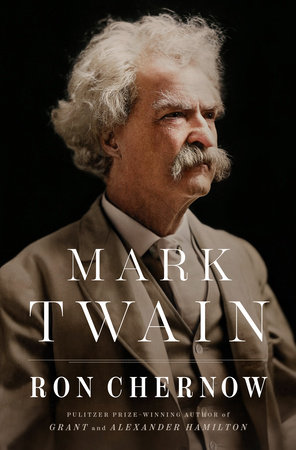
Mark Twain by Ron Chernow (ΦBK, Yale College)

Before he was Mark Twain, he was Samuel Langhorne Clemens. Born in 1835, the man who would become America’s first, and most influential, literary celebrity spent his childhood dreaming of piloting steamboats on the Mississippi. But when the Civil War interrupted his career on the river, the young Twain went west to the Nevada Territory and accepted a job at a local newspaper, writing dispatches that attracted attention for their brashness and humor. It wasn’t long before the former steamboat pilot from Missouri was recognized across the country for his literary brilliance, writing under a pen name that he would immortalize.

In this richly nuanced portrait of Mark Twain, acclaimed biographer Ron Chernow brings his considerable powers to bear on a man who shamelessly sought fame and fortune, and crafted his persona with meticulous care. After establishing himself as a journalist, satirist, and lecturer, he eventually settled in Hartford with his wife and three daughters, where he went on to write The Adventures of Tom Sawyer and Adventures of Huckleberry Finn. He threw himself into the hurly-burly of American culture, and emerged as the nation’s most notable political pundit. At the same time, his madcap business ventures eventually bankrupted him; to economize, Twain and his family spent nine eventful years in exile in Europe. He suffered the death of his wife and two daughters, and the last stage of his life was marked by heartache, political crusades, and eccentric behavior that sometimes obscured darker forces at play.

Drawing on Twain’s bountiful archives, including thousands of letters and hundreds of unpublished manuscripts, Chernow masterfully captures the man whose career reflected the country’s westward expansion, industrialization, and foreign wars, and who was the most important white author of his generation to grapple so fully with the legacy of slavery. Today, more than one hundred years after his death, Twain’s writing continues to be read, debated, and quoted. In this brilliant work of scholarship, a moving tribute to the writer’s talent and humanity, Chernow reveals the magnificent and often maddening life of one of the most original characters in American history.

the-message

The Message by Ta-Nehisi Coates (ΦBK, Oregon State University)

Ta-Nehisi Coates originally set out to write a book about writing, in the tradition of Orwell’s classic “Politics and the English Language,” but found himself grappling with deeper questions about how our stories—our reporting and imaginative narratives and mythmaking—expose and distort our realities.

In the first of the book’s three intertwining essays, Coates, on his first trip to Africa, finds himself in two places at once: in Dakar, a modern city in Senegal, and in a mythic kingdom in his mind. Then he takes readers along with him to Columbia, South Carolina, where he reports on his own book’s banning, but also explores the larger backlash to the nation’s recent reckoning with history and the deeply rooted American mythology so visible in that city—a capital of the Confederacy with statues of segregationists looming over its public squares. Finally, in the book’s longest section, Coates travels to Palestine, where he sees with devastating clarity how easily we are misled by nationalist narratives, and the tragedy that lies in the clash between the stories we tell and the reality of life on the ground.

Written at a dramatic moment in American and global life, this work from one of the country’s most important writers is about the urgent need to untangle ourselves from the destructive myths that shape our world—and our own souls—and embrace the liberating power of even the most difficult truths.

flashlight

Flashlight by Susan Choi (ΦBK, Yale College)

One summer night, Louisa and her father take a walk on the breakwater. Her father is carrying a flashlight. He cannot swim. Later, Louisa is found on the beach, soaked to the skin, barely alive. Her father is gone. She is ten years old.

Louisa is an only child of parents who have severed themselves from the past. Her father, Serk, is Korean, but was born and raised in Japan; he lost touch with his family when they bought into the promises of postwar Pyongyang and relocated to North Korea. Her American mother, Anne, is estranged from her Midwestern family after a reckless adventure in her youth. And then there is Tobias, Anne’s illegitimate son, whose reappearance in their lives will have astonishing consequences.

But now it is just Anne and Louisa, Louisa and Anne, adrift and facing the challenges of ordinary life in the wake of great loss. United, separated, and also repelled by their mutual grief, they attempt to move on. But they cannot escape the echoes of that night. What really happened to Louisa’s father?

Shifting perspectives across time and character and turning back again and again to that night by the sea, Flashlight chases the shock waves of one family’s catastrophe, even as they are swept up in the invisible currents of history.

A monumental new novel from the National Book Award winner Susan Choi, Flashlight spans decades and continents in a spellbinding, heartgripping investigation of family, loss, memory, and the ways in which we are shaped by what we cannot see.

Image